Aluminum Foundry key ideas explained in a practical article
Wiki Article
Checking Out the Essential Functions and Benefits of Steel Shops
Steel factories serve an essential function in the manufacturing landscape. They change basic materials into accurate steel items for different industries. This procedure includes specialized strategies that assure quality and efficiency. The economic ramifications are substantial, impacting neighborhood areas and work markets. As modern technology develops, so do the techniques within the industry. Understanding these characteristics discloses much regarding the future of manufacturing and its role in sustainability. What exists in advance for metal factories?The Role of Steel Factories in Manufacturing
Steel shops play a crucial duty in the manufacturing field by transforming basic materials right into usable steel products. These facilities focus on melting and spreading metals, utilizing a variety of techniques to develop parts that offer several markets, consisting of automotive, aerospace, and building. By converting raw metal ores, scrap steel, and alloys right into accurate sizes and shapes, factories allow suppliers to generate high-grade products customized to details applications.Moreover, metal shops contribute considerably to the economic situation by offering tasks and fostering innovation in metalworking modern technologies. They frequently invest in r & d to boost performance and sustainability, reducing waste and energy usage during manufacturing procedures. The capacity to create complex geometries not just meets design requirements yet also boosts total product performance. Essentially, steel factories act as an important web link in the supply chain, ensuring the availability of vital metal elements for a myriad of applications in modern-day manufacturing.
Necessary Procedures Entailed in Steel Casting
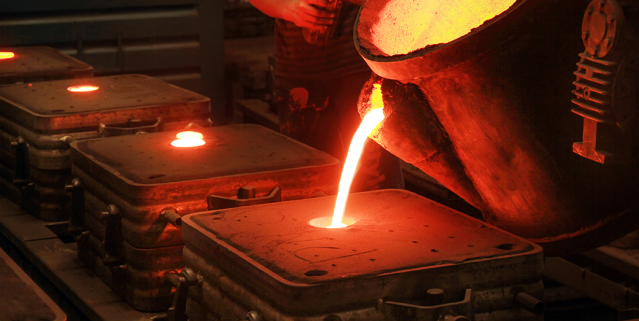
In the process of changing basic materials right into completed products, metal casting encompasses several crucial procedures that safeguard the manufacturing of top quality components. The procedure starts with the preparation of molten metal, which commonly includes melting raw products in a heater. Once the metal reaches the desired temperature, it is poured right into a mold and mildew shaped to form the end product.Air conditioning follows, where the molten steel solidifies within the mold, taking on its brand-new form. After enough air conditioning, the mold is removed, revealing the actors component. This is often followed by ending up procedures, consisting of machining, to achieve precise dimensions and surface area quality. Furthermore, assessments are conducted to determine that the spreadings satisfy defined standards and resistances. These crucial processes highlight the complex nature of metal casting, stressing the pivotal duty that each step plays in generating dependable and resilient steel items.
Sorts Of Metals Generally Made Use Of in Factories
While various steels can be utilized in factories, numerous stand out as a result of their special residential properties and suitability for specific applications. Iron, particularly in the kind of cast iron, is renowned for its toughness, toughness, and superb spreading features, making it ideal for machinery and auto components. Light weight aluminum is favored for its light-weight nature and resistance to rust, often used in aerospace and transportation markets. Copper alloys, such as bronze and brass, are selected for their outstanding conductivity and visual appeal, generally found in decorative items and electrical elements. Steel, specifically carbon steel, is valued for its sturdiness and adaptability, widely used in construction and manufacturing. Magnesium is appreciated for its low density and high strength-to-weight proportion, making it a preferred selection in applications needing light-weight products. Each of these metals provides distinct benefits that satisfy the varied needs of various sectors.Quality Assurance Procedures in Metal Shops
Quality assurance steps in steel shops are crucial for guaranteeing product stability and conformity with market requirements (Aluminum Foundry). Various evaluation strategies are employed to evaluate the residential or commercial properties of actors metals, while adherence to established standards and certifications enhances quality control. This systematic approach not only enhances operational efficiency yet additionally develops customer count on the final productsExamination Techniques Overview
Efficient assessment techniques are vital for preserving high requirements in steel foundries, as they assure that each product fulfills defined resistances and performance demands. Various techniques are used to analyze the quality of spreadings, consisting of visual inspections, dimensional checks, and non-destructive testing (NDT) Visual assessments permit drivers to recognize surface area problems such as fractures or incorporations, while dimensional checks validate that components comply with create requirements. NDT strategies, such as ultrasonic and radiographic testing, supply deeper insights right into interior flaws without damaging the product. Furthermore, automatic examination systems are progressively used to improve precision and performance. With each other, these inspection strategies play a significant function in securing product reliability and consumer satisfaction within the competitive landscape of steel factories.Requirements and Certifications
In the domain of steel shops, adherence to established qualifications and criteria offers as a keystone for high quality control steps. These criteria, such as ISO 9001 and ASTM, offer frameworks that guarantee regular product quality and dependability. Accreditation procedures entail extensive analyses, including audits and assessments, verifying that foundries fulfill specific performance criteria. Compliance with these requirements not only boosts product honesty but also cultivates client trust and complete satisfaction. Additionally, accreditation can open up brand-new markets, as many sectors need compliance for purchase. By implementing these quality control measures, metal shops can decrease problems, enhance manufacturing procedures, and maintain an one-upmanship in the market. Overall, qualifications and standards play a crucial function in guaranteeing the success and sustainability of metal foundries.Developments and Technologies in Shop Procedures
As the need for accuracy and performance in metal spreading continues to grow, shops are progressively adopting advancements and innovations that boost their operations. Automation plays a crucial role, with robot systems enhancing processes such as mold and mildew handling and casting. This not only decreases labor expenses but likewise minimizes human error, resulting in boosted item quality.In addition, improvements in computer-aided layout (CAD) and simulation software program enable factories to optimize layouts before manufacturing, enabling faster turnaround times. Incorporating 3D printing technology for producing molds and cores even more accelerates manufacturing and permits complicated geometries that traditional approaches can not accomplish.
The combination of data analytics and the Web of Things (IoT) offers real-time monitoring of tools and procedures, enhancing predictive maintenance and operational performance. These advancements jointly add to an extra receptive, nimble, and affordable foundry atmosphere, positioning them well to satisfy evolving market needs.
Economic Effect of Steel Foundries on Local Areas
The innovations in modern technology within steel shops not only improve manufacturing capacities however likewise considerably affect neighborhood economic situations. Metal factories act as a substantial resource of employment, offering jobs for skilled workers and adding to the economic security of their regions (Metal Foundry). These facilities frequently promote neighborhood companies, as they require a series of materials and services, from basic materials to transport and logistics. The existence of a steel shop can additionally attract related markets, fostering a network of distributors and sustaining services that grow in closeness to manufacturing centersFoundries contribute to the tax obligation base, producing income for regional federal governments that can be utilized for public solutions and facilities improvements. The financial causal sequence extends to community development, as foundries typically take part in regional campaigns and support labor force training programs. Generally, metal factories play an important function in boosting the economic landscape of their areas, guaranteeing development and sustainability.
Sustainability Practices in the Steel Foundry Industry
The steel factory sites market is progressively taking on sustainability practices to decrease its environmental impact. Secret techniques consist of recycling metal scrap, carrying out energy efficiency procedures, and making use of environmentally friendly spreading processes. These initiatives not only add to resource conservation but also improve the sector's overall sustainability account.Recycling Steel Scrap
Reusing steel scrap stands as a cornerstone of sustainability practices within the metal factory industry. This process not just conserves natural deposits but likewise greatly decreases landfill waste. By redeeming scrap steel, foundries can decrease the demand for virgin products, minimizing environmental effect and energy consumption connected over at this website with mining and removal. The recycling of metal scrap promotes a round economy, where materials are reused and repurposed, developing an extra sustainable production cycle. Foundries commonly apply advanced sorting and processing modern technologies to boost recycling efficiency, making certain high-quality output. As the sector increasingly focuses on environmentally friendly practices, the recycling of metal scrap stays an important component, promoting both financial practicality and environmental stewardship for future generations.Energy Performance Actions
Sustainability in the steel foundry sector extends beyond reusing practices to encompass power performance actions. Foundries are progressively taking on modern technologies that lower power intake throughout metal production and casting. Implementing advanced melting techniques, such as induction melting, allows for even more accurate temperature control and decreased energy waste. In addition, enhancing furnace procedures through heat recuperation systems captures and reuses excess heat, especially lowering general power demands. The combination of energy-efficient illumination and automation also enhances operational efficiency. By buying these power efficiency steps, foundries not only lessen their carbon footprint yet additionally realize cost savings, adding to a much more lasting and economically sensible industry. Adopting such techniques is crucial for fulfilling regulatory standards and resolving expanding ecological worries.Eco-Friendly Spreading Processes
While traditional casting techniques have actually offered the metal shop sector for years, environmentally friendly spreading processes are currently getting importance as an important part of sustainable production. These cutting-edge strategies focus on the decrease of waste, power usage, and unsafe emissions. Numerous foundries are embracing recyclable materials and water-based coatings, reducing environmental effect. Furthermore, developments in 3D printing technology help with much more effective layouts, reducing the requirement for substantial product use. Closed-loop systems are also being carried out, permitting the recycling of metals and various other spin-offs. By embracing these environment-friendly methods, steel shops not just improve their functional performance yet additionally add to the worldwide effort toward sustainability, straightening with boosting consumer need for ecologically responsible items.Frequently Asked Inquiries
What Precaution Are Applied in Metal Factories?
Precaution in steel factories consist of personal safety equipment, proper air flow systems, normal security training, threat communication, emergency reaction procedures, and regular equipment maintenance to decrease risks connected with heats and dangerous products.Just How Do Factories Handle Hazardous Materials?

What Prevail Profession Opportunities in Steel Foundries?
Typical job chances in metal shops include roles such as factory service technician, melting operator, top quality control inspector, maintenance designer, and production manager, each adding to the efficient operation and outcome of steel casting processes.
Exactly How Do Factories Take Care Of Waste and Recycling?
Foundries take care of waste and recycling through systematic procedures, consisting of the collection of scrap steel, reusing products, and carrying out eco friendly practices (Aluminum Foundry). These approaches aid reduce additional resources ecological impact while promoting resource efficiency within the industryWhat Are the Ecological Laws for Steel Foundries?
Metal foundries play a vital duty in the production market by changing raw materials into useful steel products. Quality control procedures in metal foundries are important for guaranteeing item honesty and conformity with market requirements. By implementing these top quality control procedures, steel factories can lessen defects, maximize manufacturing processes, and maintain an affordable side in the sector. Recycling steel scrap stands as a foundation of sustainability techniques within the steel factory market. While traditional spreading approaches have actually offered the steel factory sector for years, environmentally friendly casting procedures are now acquiring prominence as a crucial component of sustainable manufacturing.
Report this wiki page